American Reindustrialization Is Impossible
Why are we pretending the United States can transition back to a manufacturing-led economy from its current services-based one?

There’s been ongoing talk between the private sector and government over the last few years about how to reindustrialize the country, especially in the wake of China’s entrenched dominance.
Despite the trillions of dollars in pledged capital from the private sector, and subsidies and tariffs from the public sector to stimulate internal production, here’s where America stands:
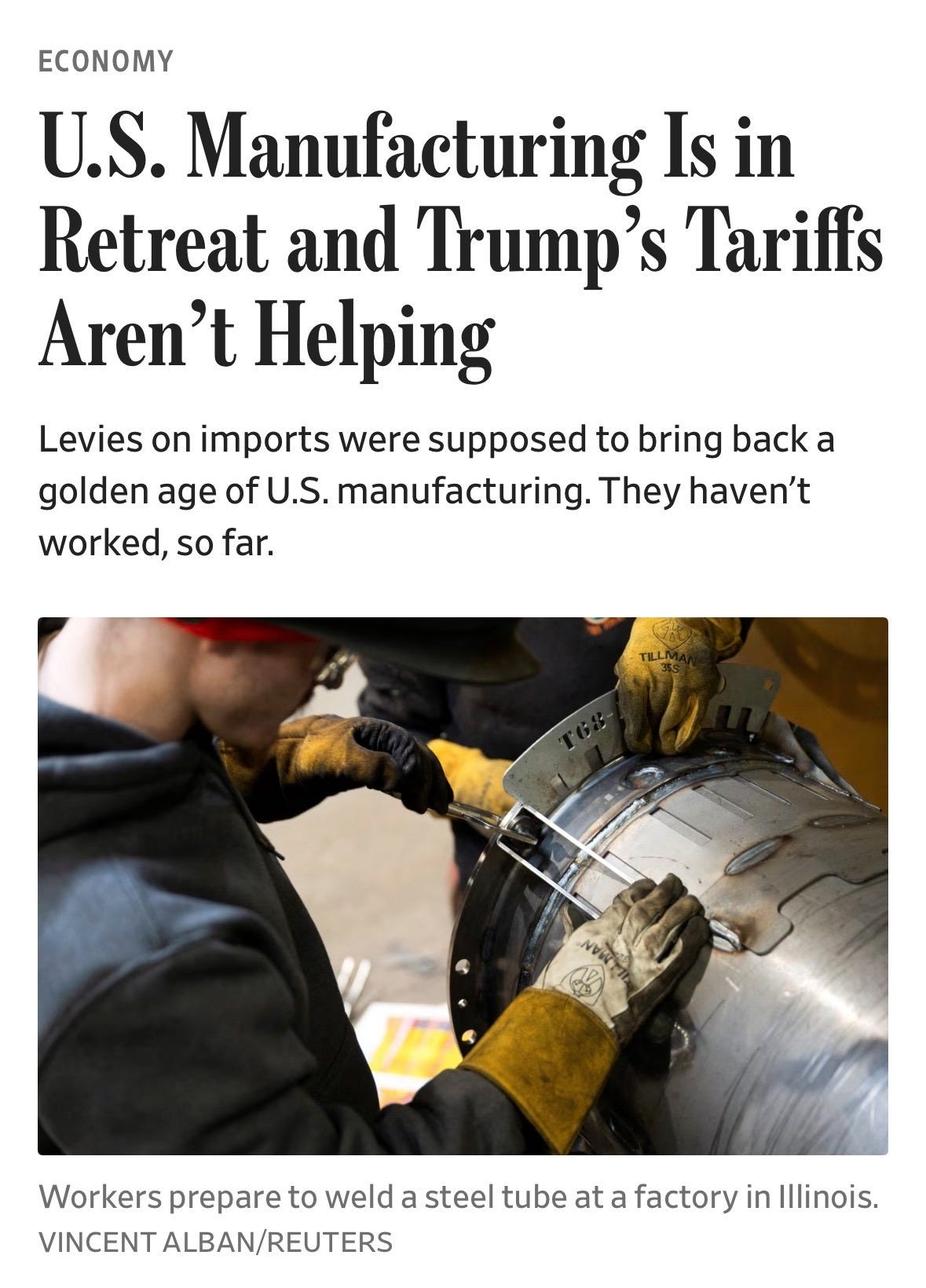
There’s no surprise here, because there’s a complete failure between the public and private sectors to stimulate large-scale industrial activity beyond what already exists. Looking beyond the headlines of the trillions pledged and billions spent, you’ll find a missing term: human capital.


At the end of the day, at the root of all industrial development is the development of human beings into more skilled, competent workers. There has been little, if any, attention paid to how to build systems & ecosystems that generate more highly capable workers who can increase today’s manufacturing output and lay the groundwork for cutting-edge American factories that can compete with China and other elite manufacturing companies.
There is a deeper contradiction at play, best captured by Lewis F. Powell Jr. in his infamous Powell Memo:

Powell was discussing the rising trend of criticism of America’s free enterprise system coming from segments of society such as college campuses, the media, government, and just broader civil society in general. This was back when deindustrialization had not yet begun, unions across industries were still strong, and education was cheap and accessible to a growing middle class.
Powell found the “enterprise system” under attack from these interest groups, and his memo was influential (though certainly not the sole cause) in the subsequent defunding of college campuses, the destruction of unions, and the offshoring of industry.
The result is the broad base of America’s destruction of its human capital in the aggregate, leading to the scenario today where the nation wants to reindustrialize, but does not have the systems or ecosystems in place to do so. The past five decades since his memo reflect America’s permanent choice of the interests of Capital over Labor and Business over Industry.
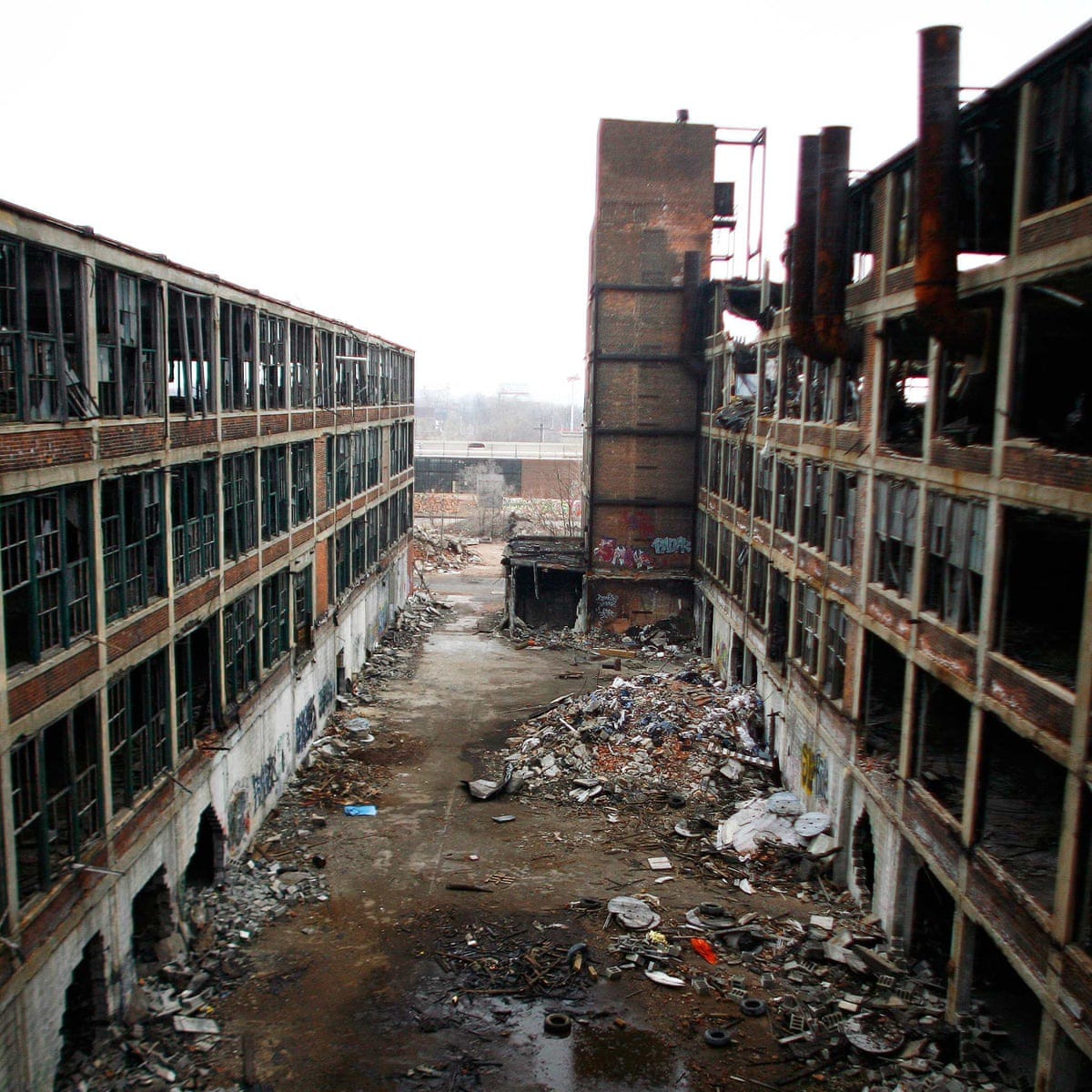
I’ve been working my way through a book called Glass House that tells the story of the decline of Lancaster, Ohio, a town built around traditional manufacturing. Once these thriving manufacturing businesses downsized and left due to economic headwinds and offshoring, the city never recovered. The town is a husk of what it once was.
America ceased to invest in towns like Lancaster, which have fallen into permanent disrepair. I believe this choice is irreversible, and the distribution and quality of human capital we see today reflects that choice. Your best and brightest go into areas like tech, finance, and consulting, while the remainder is spread across other knowledge-work industries, and then the remainder join the ever-growing service sector.
American reindustrialization doesn’t come down to which high-flying startups are funded by Silicon Valley insiders, but requires a broad-based investment at all levels of society by our government in its citizenry at large.
Soda
Even if America were to reindustrialize in a meaningful way, it would be advanced, automated industry that wouldn't provide the scale of job creation that people wax nostalgic over. There is no returning to the past, only moving forward.